Cordero Mario
Castiglione Falletto, Barolo, Piemonte
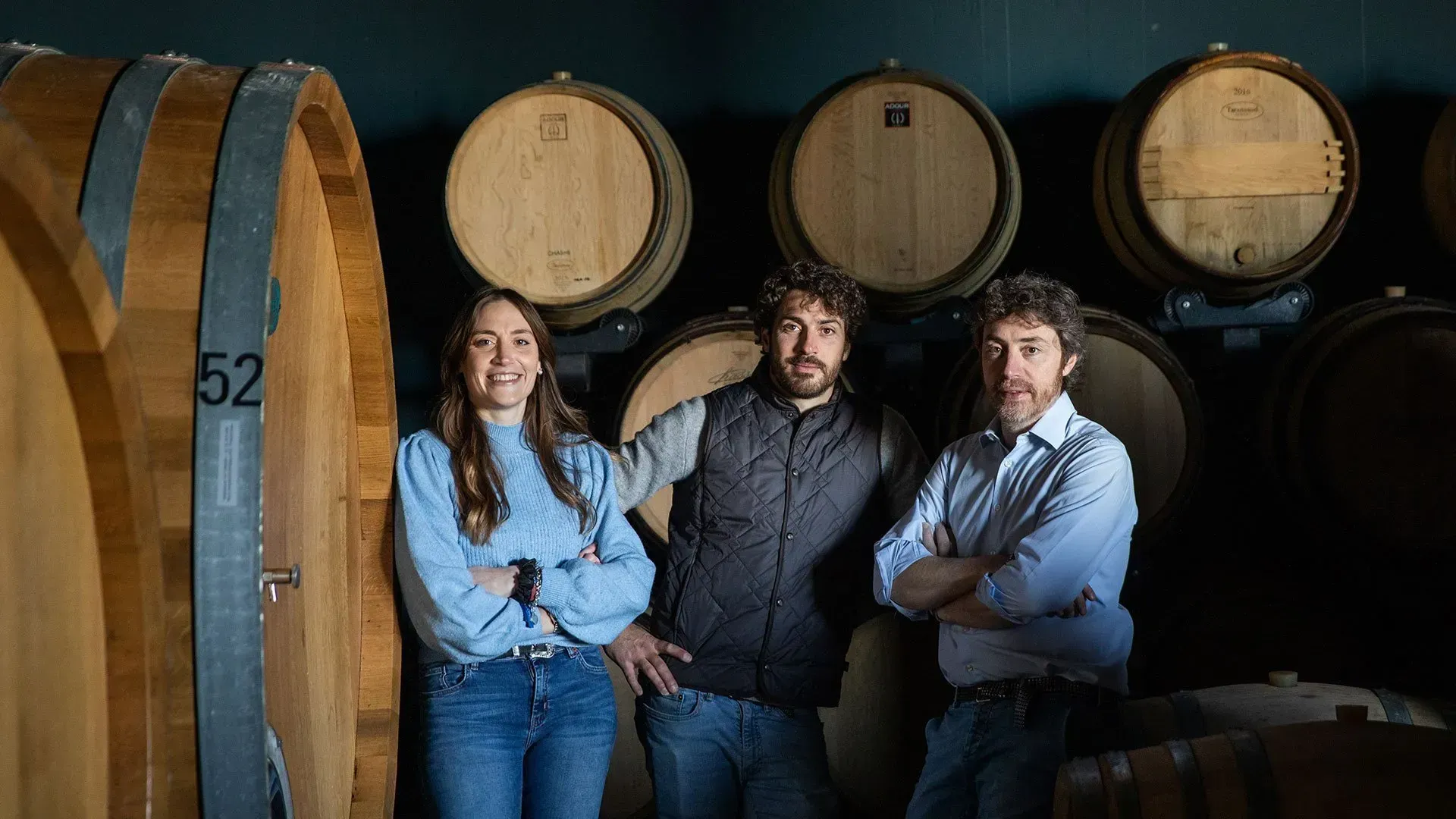
Cordero Mario feels less like the beginning of a new winery than a family finding its way home. The Corderos have been tied to the vineyards of the Langhe for generations. Caterina, Lorenzo, and Francesco Cordero are the grandchildren of Luciana Vietti and Alfredo Currado, two of the central figures behind historic Vietti, where their father Mario Cordero also spent much of his life helping develop the estate and its wines. After selling Vietti in 2016, and, well, you can judge for yourself the trajectory of the wines after the family fully stepped away in 2019, the Corderos headed east into Lombardia. There they bought Castel San Giorgio in Oltrepò Pavese and launched Cordero San Giorgio, throwing themselves into a place whose enormous potential for Pinot Nero they felt had never been given its full due.
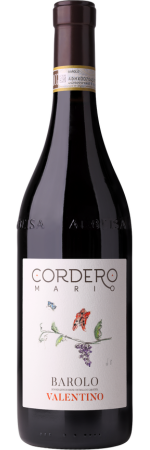
But apparently you can take the Corderos out of Barolo, you cannot take Barolo out of the Corderos. “We decided to come back to the Langhe because it is in our DNA,” Caterina told me. What finally sucked them home was an extraordinary little parcel in the Valentino MGA of Castiglione Falletto, and this was not the kind of vineyard you say no to. Valentino sits between Villero and Monprivato, on a west-facing slope looking across toward La Morra at roughly 300 metres elevation, with sandy Sant’Agata Fossili marls underfoot. The vineyard was planted in 1969, trained to Guyot, and, most importantly, planted entirely to Nebbiolo Rosé, the old and increasingly rare Nebbiolo clone prized for the delicacy and elegance it can give. To make the whole thing even more wine-geeky, Cordero Mario is the first and currently only producer to bottle Valentino under its MGA name.
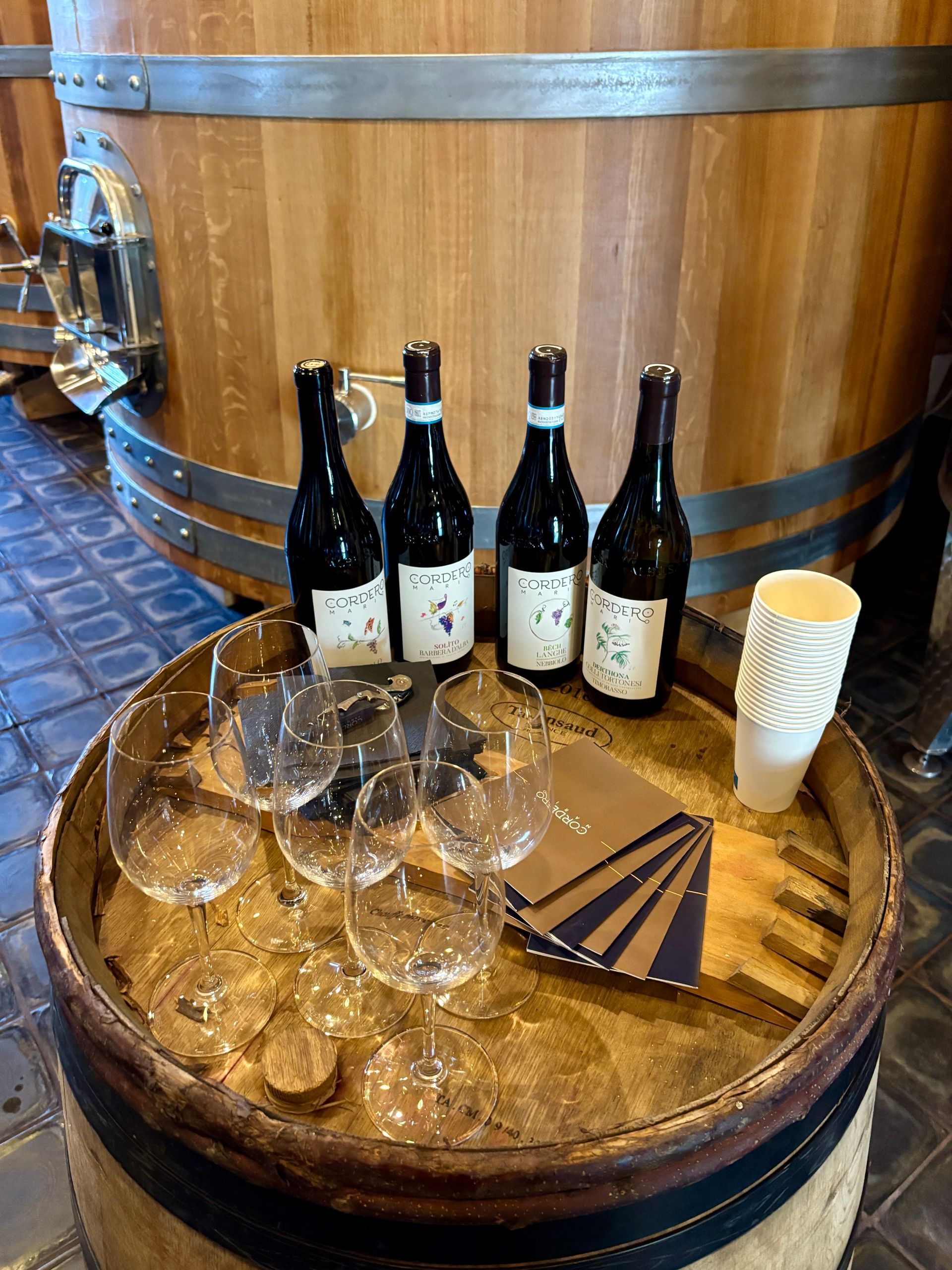
They bought the vineyard in 2020 and made one barrel of Barolo. That was it, which, if you know wine families, is roughly how these things get out of hand. By 2023, the project had grown enough that they needed a new winery, and other wines began appearing around Valentino: Bèch Langhe Nebbiolo, Barbera d’Alba, Verduno Pelaverga, and Derthona Timorasso. Today they work roughly 13 hectares and produce only around 25,000 bottles, with Langhe Nebbiolo accounting for more than half of production. There is more coming too, including, eventually, a Barolo Classico.
When you taste their Valentino, or their Bèch, which might genuinely be the best Langhe Nebbiolo I’ve ever tasted, it feels a little like watching legendary athletes get back to work. There is finesse, ease, confidence, aura. Nothing seems strained or built to prove how serious it is. They simply know how to do this. That confidence comes from decades spent working these varieties and these hills, but the wines do not feel nostalgic or stuck trying to recreate something they already did. They feel like the family has taken everything they learned and suddenly has the freedom to decide what they actually want to do with it.
Maybe even more exciting than the Barolo itself is that Cordero Mario has given the family a place to resume the native-variety exploration that was always such an important part of their work at Vietti. They already have Pelaverga from Verduno, the only village where Verduno Pelaverga can be produced, Timorasso from Monleale in the Colli Tortonesi, Barbera from Castiglione Tinella and the Scarrone vineyard in Castiglione Falletto, and Nebbiolo largely from Castiglione Falletto and Monforte. It is already becoming this wonderfully specific little portrait of Piemonte, and it feels very much like they are only getting started.
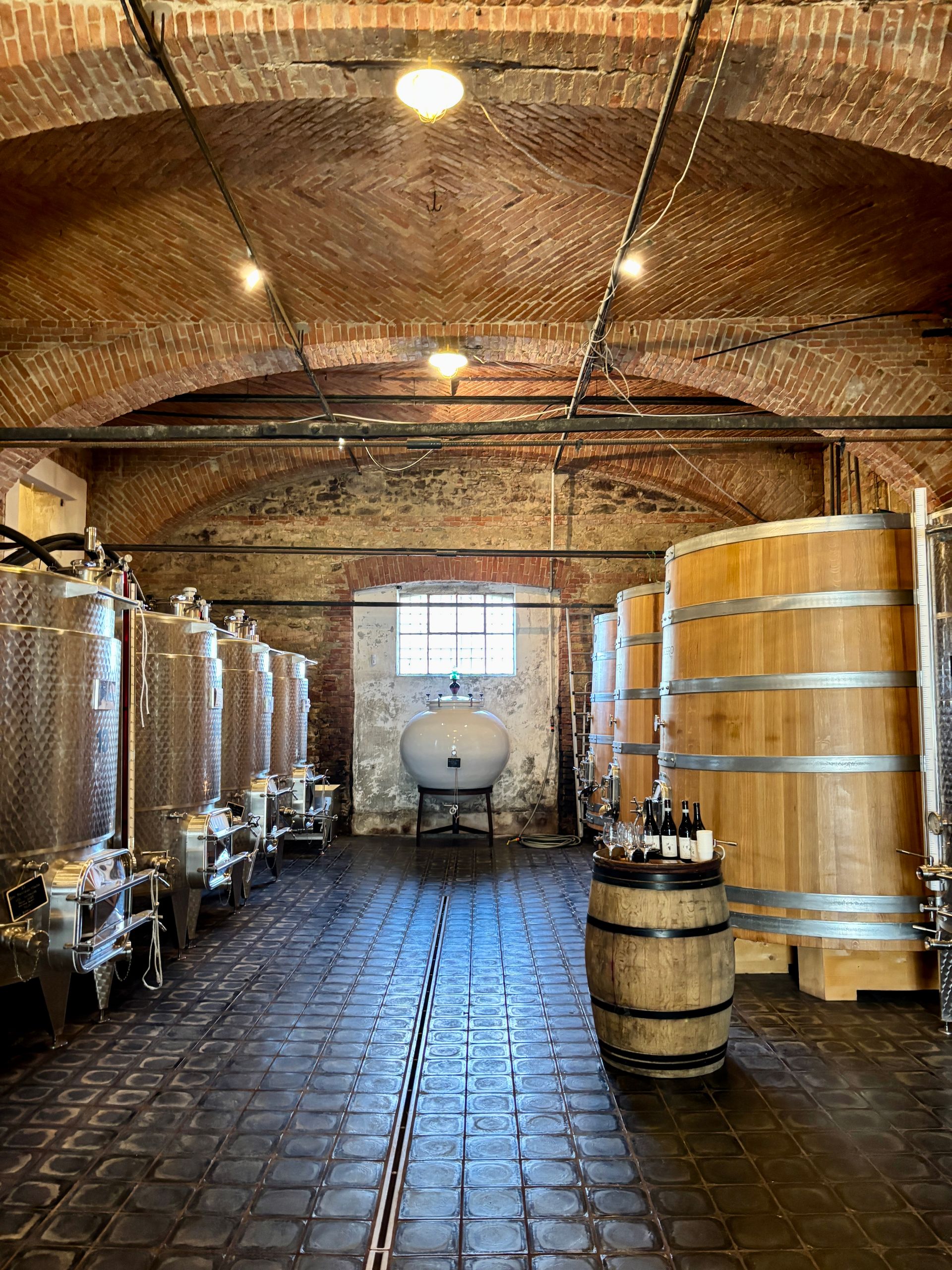
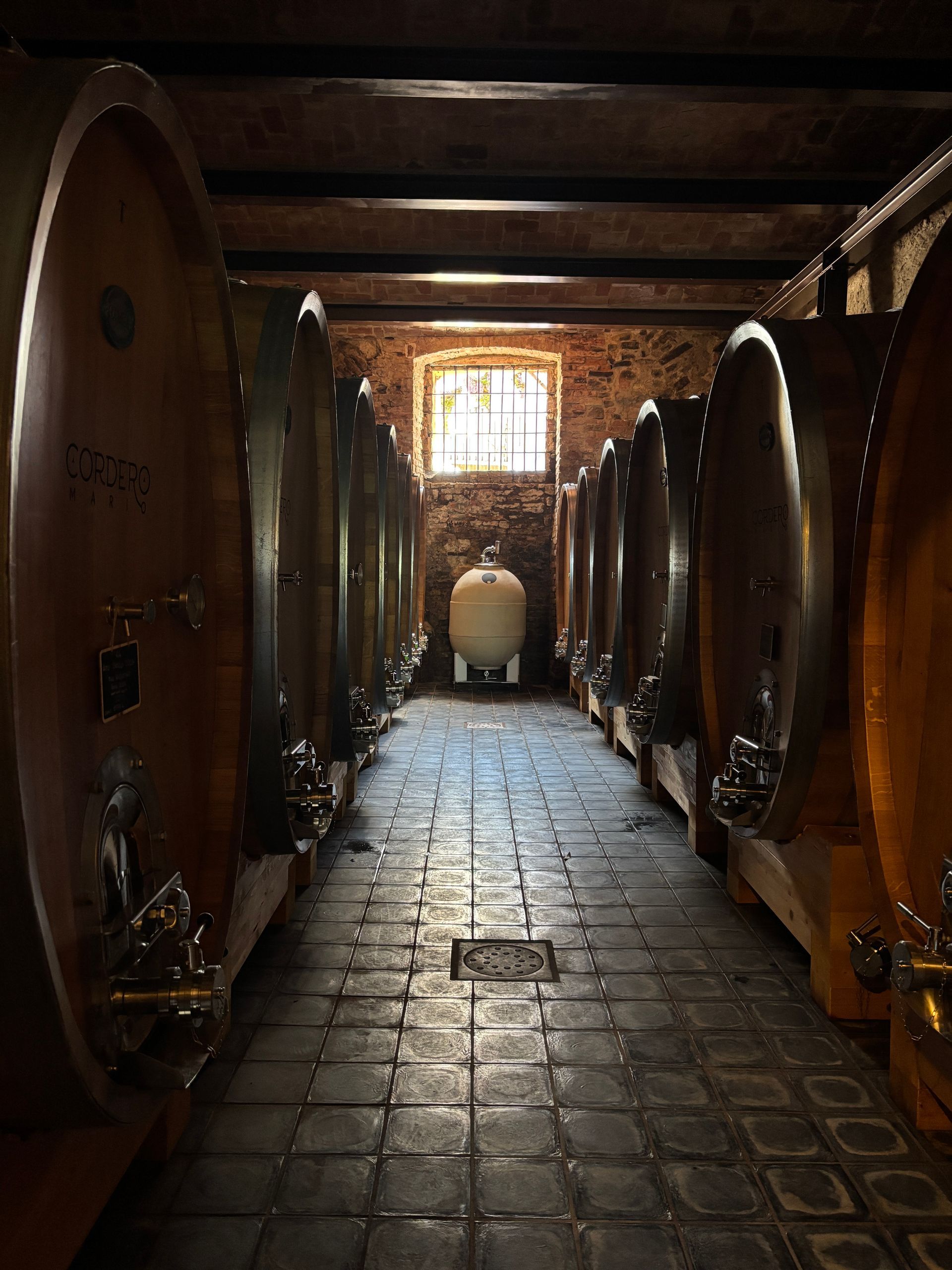
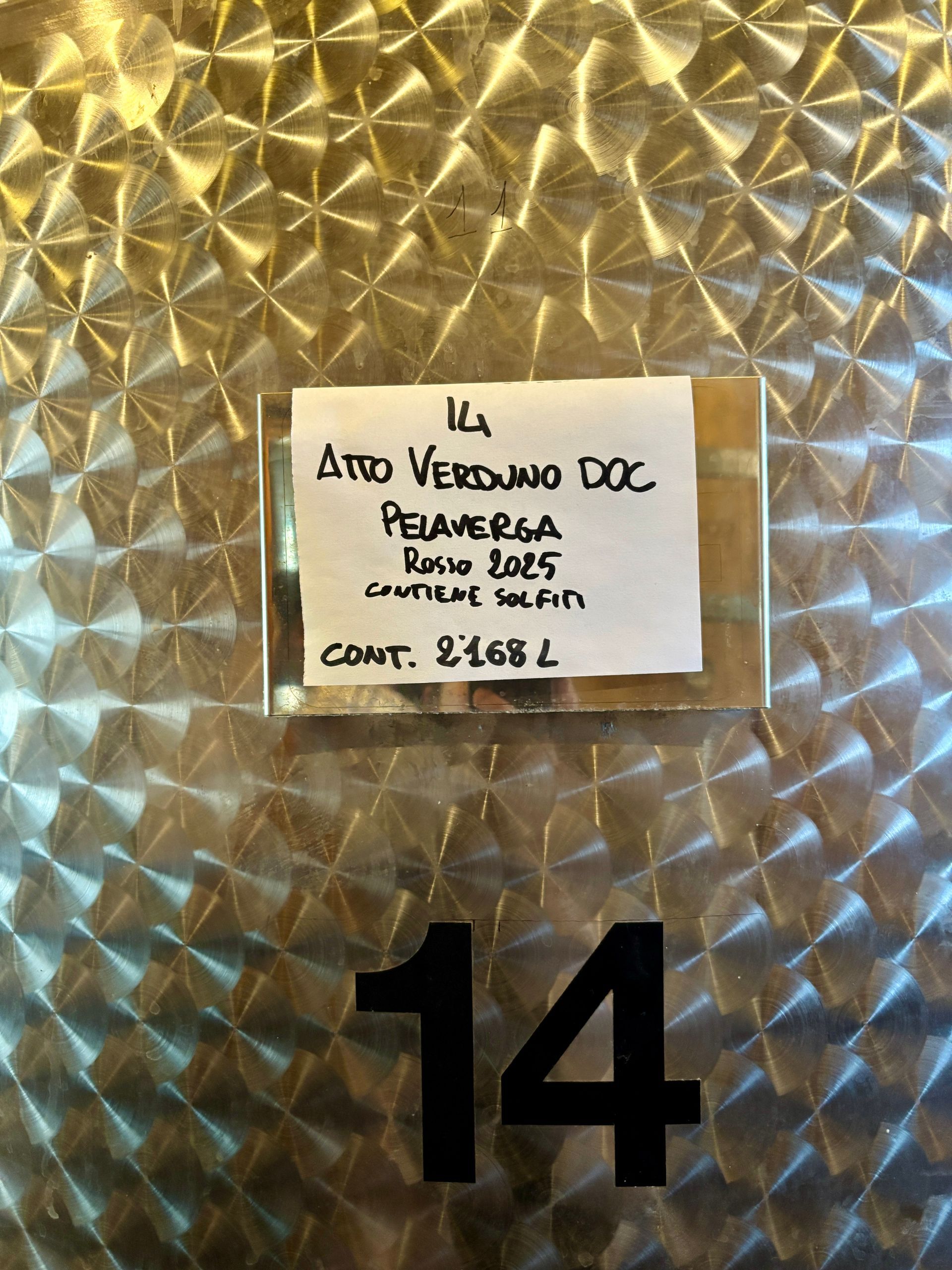
Lorenzo is responsible for the vineyards and winemaking at both Cordero Mario and Cordero San Giorgio, and his experience stretches well beyond the Langhe. His obsession with Pinot Noir took him to Ata Rangi in New Zealand, Ponzi Vineyards in Oregon, and Côte-Rôtie in France, and you can feel that curiosity in how he approaches the cellar. The Timorasso sees a concrete egg, while the Pelaverga stays in stainless steel. The treatment changes with the grape rather than forcing every wine through one house recipe, which I think is exactly the point.
Importantly, there is very little dogma here. The vineyards are farmed according to organic principles, although they are not certified organic, and the estate is SQNPI certified. They plant cover crops between the vine rows, maintain hedgerows and native vegetation, reduce pesticide use, work deliberately to improve soil health, and preserve old trees and surrounding forests.
Fermentations, at least for now, are not spontaneous. They are renovating an old winery, and Lorenzo wants to understand and control the microbiological environment before experimenting with native ferments. Maybe one day they will. I actually love the lack of ideology in that answer. The objective is not to tick every fashionable winemaking box; it is to make clean, transparent wines that let the vineyard and variety remain recognizable.
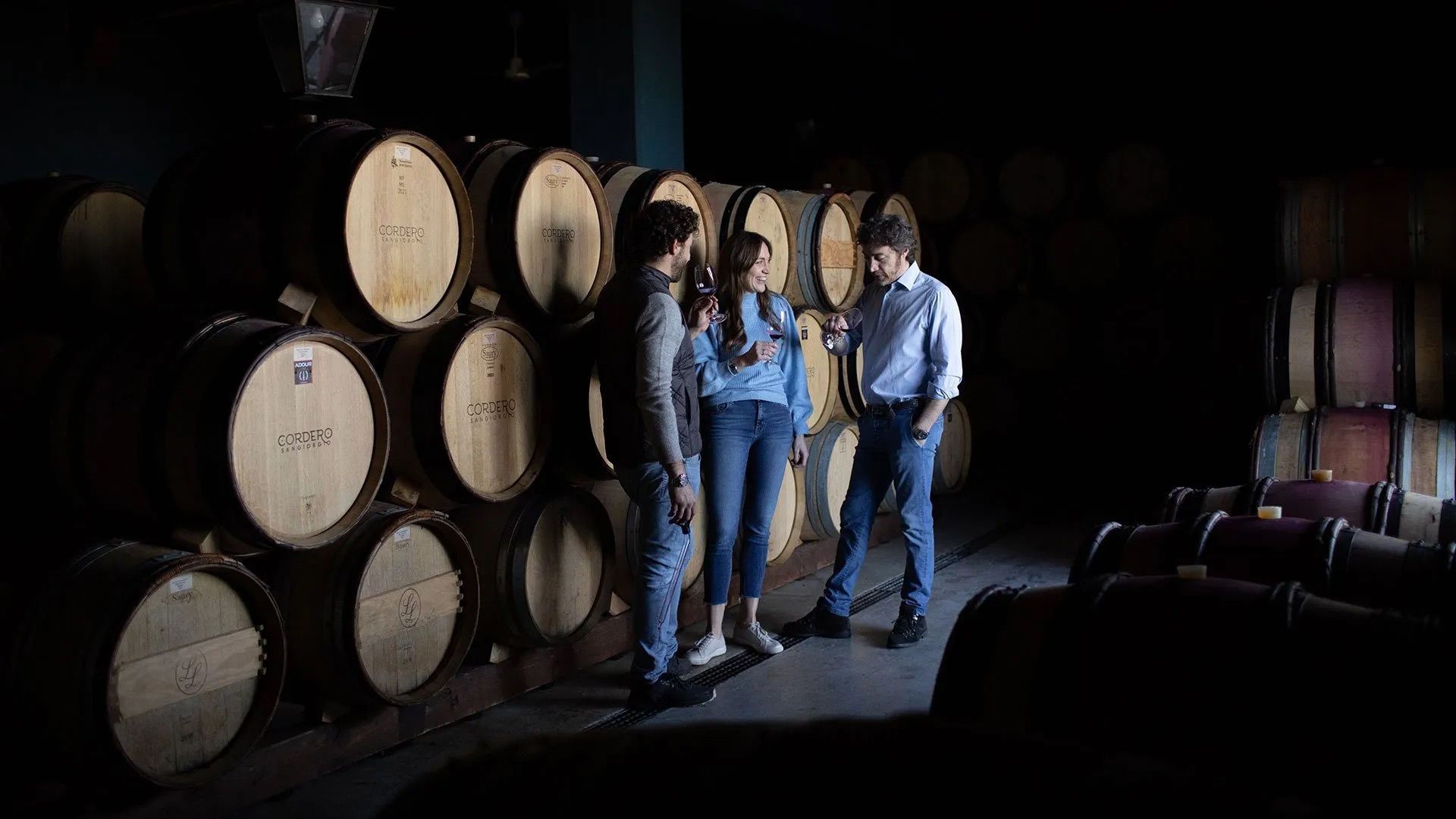
The family structure itself is similarly straightforward. Lorenzo looks after the vineyards and winemaking at both estates, Caterina handles administration and sales, and Francesco is also a winemaker and works particularly closely with the Asian market. And Mario? The winery is named after him, although he insists that he is merely a “volunteer.” Nobody appears particularly convinced. 😝
There is one final detail that somehow makes the whole project even better: the labels are painted by their grandmother, Luciana Vietti. Luciana has always loved painting and art, and in the early days of Vietti, long before those artist labels became some of the most recognizable bottles in Piemonte, she was already painting labels for the family wines. When her grandchildren began this new journey, she picked up the brushes again, hoping, she said, that it would bring them good luck. It is such a small thing, but it says almost everything about Cordero Mario.
Cordero Mario is not a family trying to recreate Vietti.
They already did Vietti. This feels much more interesting than that. It is three siblings taking generations of knowledge, returning to the vineyards that made their family, and deciding what they want to explore now. It started with one old vineyard and one barrel of Barolo. Now there is Valentino, Bèch, Pelaverga, Timorasso, Barbera, and more on the way.

Wines by this Producer
2024 Colli Tortonesi Timorasso DOC Derthona
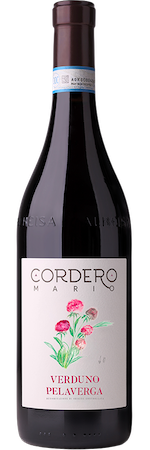
2025 Verduno Pelaverga DOC Pelaverga
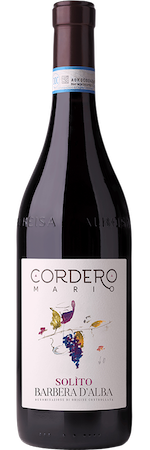
2023 Barbera d'Alba DOC Solìto
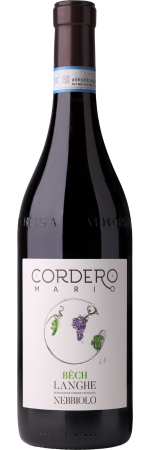
2023 Langhe Nebbiolo DOC Bèch