
Bertinga
Gaiole in Chianti, Tuscany, Italy
On the northern hills of Gaiole in Chianti, Bertinga farms a small patchwork of steep, high elevation vineyards in one of the cooler corners of the commune. The estate sits among Bertinga, Adine, and Vertine, three vineyards that together form a patchwork of soils, exposures, and altitudes. Though the modern estate was formed in 2015, the land itself carries centuries of history, whispers of 6th-century Lombard settlements, and the memory of a landholder named Berto, whose name evolved into Le Bertinghe, and eventually Bertinga.
To put the vineyard at the center has been a shared vision since day one. It is no coincidence that the winemaker is Stéphane Derenoncourt, one of Bordeaux’s most highly reputed winemakers, internationally celebrated for his terroir-driven approach to viticulture and winemaking. Stéphane has honed his craft at some of Bordeaux’s finest estates, including Château Pavie-Maquin, Château Talbot, Château La Gaffelière, Clos Fourtet, and Château Smith Haut Lafitte. The decision to craft mostly IGT wines rather than force the wines into stricter DOC/DOCG regulations reflects Bertinga’s uncompromising, terroir-first philosophy and relentless quest for excellence.
The Bertinga vineyard forms the structural backbone of the estate. Perched above a deep valley at roughly 380 meters, its five parcels, nine hectares in total, sit on compact, heavy limestone, calcareous marl clay soils (Alberese) that leave an unmistakable imprint on the fruit. Besides being perfect for Sangiovese, the calcareous clay soil with high limestone content is ideal for Merlot, whose ripening is slowed by the cool temperatures and elevation. The valley unfolds in multiple exposures: south, southwest, and, at the highest point, north-northeast. Parcel no. 10, the loftiest, contains the estate’s most clay-rich soils, perfect for Merlot. From this cool site emerges Volta di Bertinga, a wine that has quickly become one of the estate’s quiet calling cards.
Climb higher along the ridge, and the tone shifts. Adine speaks in a brighter register. Here, fractured marine clay limestone soils, reddish brown and naturally heat-retentive, create near ideal conditions for Sangiovese. The Punta di Adine is born on the 520 metre summit, where vine rows plunge some 60 steep, sun-washed metres down ventilated slopes. Of seabed origin, these soils mix abundant stone with light, loose clay; their deep, broken structure gathers warmth by day and releases it slowly, coaxing aromatic lift and mineral drive from the vines.
At Vertine, the mood turns finer still. South-facing and watched over for centuries by its historic castle, this fan-shaped three-hectare site clings to a 500 metre hill. Here, Sangiovese roots push deep into classic galestro and Alberese stones (hallmark of Gaiole in Chianti), yielding wines marked by finesse and finely etched tannins.
Throughout the estate, the respectful interaction between man and nature is the backbone of Bertinga.
Farming is fully organic and intensely parcel-specific. Vines, planted at roughly 5,000 per hectare and trained to spurred cordon, are worked entirely by hand. Cover crops restore soil vitality, and the steep terrain naturally limits yields, concentrating the fruit. In the cellar, the philosophy remains measured and deliberately restrained. Grapes are hand-harvested into small boxes, carefully sorted, and fermented parcel by parcel in stainless steel or concrete according to the character of the vintage. The wines then rest at length in French oak before extended bottle ageing, with final blends assembled only after rigorous tasting.
They translate their terroir in their own unforced, particular way, producing wines that are Chiantis not merely by denomination but in their very DNA, and we could not be prouder to bring these stunning wines to Alberta. Salute, my friends.
Here’s the lineup. La Porta di Vertine is Bertinga’s nod to the history of Gaiole in Chianti, the wine that really put them on the map, thanks to the DOCG appellation that has shaped Italian wine history. Sassi Chiusi is their everyday pleasure wine, a true Second Vin that is charming now but can age gracefully if you let it. Bertinga itself is the quintessential Super Tuscan, a perfect blend of Sangiovese and Merlot that really shows the personality of the vineyard. Punta di Adine comes from a single parcel of Sangiovese and is elegant and layered, with earthy depth, great longevity, and hints of menthol, green olives, and currants. And finally, Volta di Bertinga, their rising-star Merlot from a single parcel, captures Gaiole’s character beautifully with incredible depth, structure, and finesse.
Further Reading on 2019 Volta di Bertinga, 1st place in Top Merlots of the World Blind Tasting:
The 2019 Volta di Bertinga was recently included in an exclusive blind tasting on July 15, 2025, featuring 18 of the best Merlot-based reds in the world, including Pomerol’s Pétrus, Le Pin, and L’Eglise-Clinet; St. Emilion’s Chateau Angélus; and Italy’s Masseto by Ornellaia, L’Apparita by Castello di Ama, La Ricolma by San Giusto a Rentennano, Redigaffi by Tua Rita, Messorio by Le Macchiole, Galatrona by Pertolo, and Sette by Tenuta Sette Ponti. The tasting panel of eight included Luca Sanjust of Petrolo, Barolo’s Roberto Voerzio, and James Suckling. The 2019 Volta di Bertinga took the day as the number one, a much discussed coup for this only 10-year-old estate, born out of an acquisition of parts of Castello di Ama and led by a star-studded team. In his subsequent 99pt review, Suckling deemed the wine a “Masterpiece.” Read the James Suckling Article here for free.
To quote:
“A small blind tasting last Friday in Tuscany of some of the best merlot-based reds in the world highlighted how Italy may now be making some of the best bottles on earth from the coveted grape, with the top wines of the tasting all Italian. The wines placing first, second and third were the Bertinga Toscana Volta di Bertinga 2019, Le Vigne di Zamó Merlot Friuli Colli Orientali Vigne Cinquant'Anni 2019 and Roberto Voerzio Merlot Langhe Pissota 2018, respectively. […] Of course, the small tasting of reds from Bordeaux’s Right Bank and Italy, mostly Tuscany, is not conclusive, but it does give an indication that Italian merlots compete with some of the best in the world. […] I must admit that I was as surprised with the No. 1 choice of the tasting as almost everyone else in the room. The Bertinga Volta di Bertinga 2019 is a pure merlot from Chianti Classico that has only been made since 2015, although it comes from vineyards that were originally part of the famous Chianti Classico and merlot maker Castello di Ama. Ama arguably put merlot on the fine wine map with Ornellaia (Masseto), making great bottles from the grape in the 1980s. The 17 hectares of Bertinga vineyards, like Ama, are in the Gaiole area of Chianti Classico, and Volta di Bertinga is a small single vineyard of about 2.45 hectares at an altitude of 380 meters above sea level and facing northeast. […] “It’s easy to understand why it was the favorite wine of the tasting,” said Roberto Voerzio, one of the best winemakers in Italy who is known for his legendary Barolos, although his merlot from Langhe came in third. “It was the most fresh and precise of all the wines.”
Volta di Bertinga is one of the so-called Fantastic Four of Italian Merlot, alongside Masseto of Ornellaia, Messorio of Le Macchiole, and L'Apparita of Castello di Ama.

Wines by this Producer
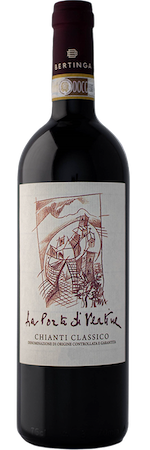
2022 Chianti Classico DOCG La Porta di Vertine
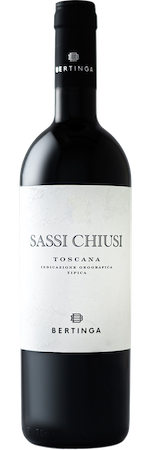
2020 Toscana IGT Sassi Chiusi
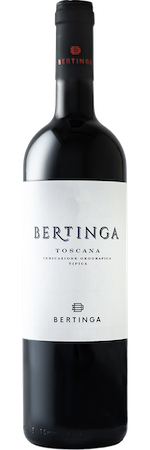
2018 Toscana IGT Bertinga
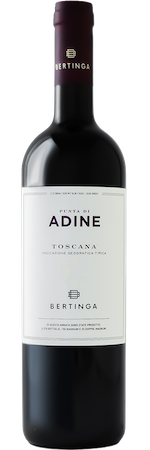
2019 Toscana IGT Punta di Adine
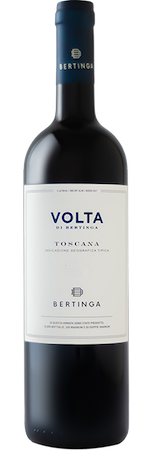
2019 Toscana IGT Volta di Bertinga