Château Palmer
2014 Margaux AOC, 3ème Grand Cru Classé en 1855
"It's easy to call this a beautiful wine—it's dense and lush, with great layers of black fruit and acidity. The first fully biodynamic vintage from this estate has certainly yielded impressive ripe fruit, with structured tannins and dark berry flavors that linger long. It has enormous potential, certainly not be ready to drink before 2027." 97 pts, Roger Voss, Wine Enthusiast


Region: Margaux, Bordeaux
Appellation: Margaux AOC
Varietal/Blend: Cabernet Sauvignon 49%, Merlot 45%, Petit Verdot 6%
ABV: 13.5%
Vineyard & Vine Age: The estate is located on the Plateau des Brauzes in Margaux, on deep Quaternary gravel terraces deposited by the Garonne River. Soils of gravel, lydian stone, quartzite, and chalcedony provide excellent drainage and vigour control. Harvest took place from September 22 to October 14 under dry, healthy conditions, with fruit picked at full ripeness and no botrytis. No sulphur was added at harvest. All fruit is estate-grown.
Cellar: Vinified parcel by parcel in 54 temperature-controlled conical vats (89–195 hL), the wine is aged over 20 months in French oak and foudres (60% new) with final blending before bottling.
CSPC: 129522
Winemakers Note:
Château Palmer on the 2014 vintage:
This is a rare and precious vintage, as it simultaneously embodies a bicentenary and a revolution. In 1814, Major General Charles Palmer lent his name to the estate, promising to bring the very best out of this magnificent terroir by producing exceptional wines. Some 200 years later, while remaining true to both its name and its history, Château Palmer has snubbed convention and masterfully achieved a complete conversion to organic and biodynamic farming methods. In 2014, biodynamic viticulture was no longer a mere intuition or a promise, but a decisive success spelling great things for the decade to come.
The winter was mild with plenty of rainfall, helping the estate’s soil to replenish its water reserves. There were a few days of frost, which encouraged the vines to bud early. Spring, on the other hand, delayed its flourish and flowering finally began at the end of May in a damp climate. From July onwards, the weather was unstable, and the summer took a stormy turn. The vines put their energy into their foliage – to the detriment of the grapes. August was one of the coolest since 2000, with little temperature variation. Veraison was sluggish as a result and the grapes grew too big. The winegrowers feared the worst – a rerun of 2013.
Fortunately, a fantastic autumn saved the day. Between September and the first half of October, exceptionally hot and dry conditions gradually shifted the vintage’s profile and quality. From 27 August onwards, the sun reappeared and settled into the Margaux sky. This late (but timely) Indian summer lasted until the end of October. Temperatures soared, the dry weather reduced the size of the grapes and drove the development of sugars, anthocyanins and tannins. It was an autumn of high temperatures in every sense.
The harvest began on 22 September, and ended under glorious sunshine on 14 October. The ideal weather allowed the grapes to be picked at perfect ripeness, with no botrytis pressure. Meanwhile, innovation was the watchword in the vat room. The Château Palmer teams decided that the harvest was healthy enough to dispense with added sulphur, drawing on the results of experiments launched two years before. The idea was to enable the grapes to express their full complexity immediately.
What the Critics are saying:

Region: Margaux, Bordeaux
Appellation: Margaux AOC

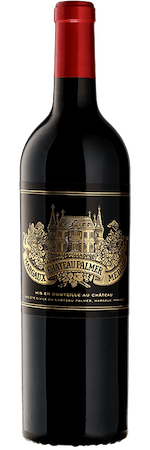
"It's easy to call this a beautiful wine—it's dense and lush, with great layers of black fruit and acidity. The first fully biodynamic vintage from this estate has certainly yielded impressive ripe fruit, with structured tannins and dark berry flavors that linger long. It has enormous potential, certainly not be ready to drink before 2027." 97 pts, Roger Voss, Wine Enthusiast
TECHNICAL INFO
Varietal/Blend: Cabernet Sauvignon 49%, Merlot 45%, Petit Verdot 6%
ABV: 13.5%
Vineyard: The estate is located on the Plateau des Brauzes in Margaux, on deep Quaternary gravel terraces deposited by the Garonne River. Soils of gravel, lydian stone, quartzite, and chalcedony provide excellent drainage and vigour control. Harvest took place from September 22 to October 14 under dry, healthy conditions, with fruit picked at full ripeness and no botrytis. No sulphur was added at harvest. All fruit is estate-grown.
Cellar: Vinified parcel by parcel in 54 temperature-controlled conical vats (89–195 hL), the wine is aged over 20 months in French oak and foudres (60% new) with final blending before bottling.
CSPC: 129522
Winemakers Note: Château Palmer on the 2014 vintage:
This is a rare and precious vintage, as it simultaneously embodies a bicentenary and a revolution. In 1814, Major General Charles Palmer lent his name to the estate, promising to bring the very best out of this magnificent terroir by producing exceptional wines. Some 200 years later, while remaining true to both its name and its history, Château Palmer has snubbed convention and masterfully achieved a complete conversion to organic and biodynamic farming methods. In 2014, biodynamic viticulture was no longer a mere intuition or a promise, but a decisive success spelling great things for the decade to come.
The winter was mild with plenty of rainfall, helping the estate’s soil to replenish its water reserves. There were a few days of frost, which encouraged the vines to bud early. Spring, on the other hand, delayed its flourish and flowering finally began at the end of May in a damp climate. From July onwards, the weather was unstable, and the summer took a stormy turn. The vines put their energy into their foliage – to the detriment of the grapes. August was one of the coolest since 2000, with little temperature variation. Veraison was sluggish as a result and the grapes grew too big. The winegrowers feared the worst – a rerun of 2013.
Fortunately, a fantastic autumn saved the day. Between September and the first half of October, exceptionally hot and dry conditions gradually shifted the vintage’s profile and quality. From 27 August onwards, the sun reappeared and settled into the Margaux sky. This late (but timely) Indian summer lasted until the end of October. Temperatures soared, the dry weather reduced the size of the grapes and drove the development of sugars, anthocyanins and tannins. It was an autumn of high temperatures in every sense.
The harvest began on 22 September, and ended under glorious sunshine on 14 October. The ideal weather allowed the grapes to be picked at perfect ripeness, with no botrytis pressure. Meanwhile, innovation was the watchword in the vat room. The Château Palmer teams decided that the harvest was healthy enough to dispense with added sulphur, drawing on the results of experiments launched two years before. The idea was to enable the grapes to express their full complexity immediately.
What the Critics are saying:
Giovanni Autuori
Calgary + Alberta South
T: 403-971-1898
E: giovanni@vinoalvino.ca
Joe Gurba
Edmonton + Alberta North
T: 780-203-5284
E: joeg@vinoalvino.ca
New Title
New Title
New Paragraph

TECHNICAL INFO
Country: France
Region: Margaux, Bordeaux
Appellation: Margaux AOC
Climate:
Altitude:
Soils:
Varietal/Blend: Cabernet Sauvignon 49%, Merlot 45%, Petit Verdot 6%
Fermentation: Spontaneous fermentation with native yeasts in old oak puncheons.
Ageing:
Vineyard & Vine Age: Bull Swamp and Manilla vineyards in Baw Baw Shire. The vines were planted in 1961 and and 1964 respectively.
ABV: 13.5%
Produced Cases: 50
CSPC: 129522
Calgary + Alberta South
Andrew Stewart
403-604-0408
andrew@vinoalvino.ca
Edmonton + Alberta North
Joe Gurba
780-203-5284
joe@vinoalvino.ca
Saskatoon + Saskatchewan South
Kerrie Gavin
306-290-0277
kerrie@vinoalvino.ca