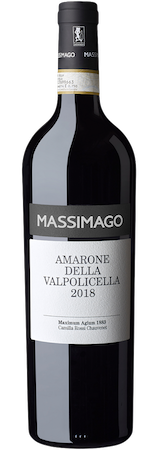

Massimago
Valpolicella, Veneto, Italy
Massimago farms a beautiful, slightly wilder corner of Valpolicella in the Mezzane Valley, on the eastern side of the denomination, not far from Verona. The name comes from Maximum agium, the Roman expression for a place of maximum well-being, and it fits. The Cracco family has held this land since the mid-nineteenth century, and the estate developed as a true agricultural property where vines, olives, woods, and daily life evolved together.
Today, the property forms a single, continuous 30-hectare plot, a true monopole not shared with any other producer. It stretches from roughly 80 to 350 metres above sea level on predominantly southwest-facing slopes. Forests and natural valleys surround the vineyards, protecting them from drift and creating a living buffer that supports biodiversity. The valley was once under the sea, and the soils still reflect this layered history, shifting between red clays rich in organic matter, limestone that brings lift and minerality, and porous marls mixed with stone that ensure drainage. This natural mosaic, together with careful farming, allows Massimago to work organically with a low environmental impact, supported by green manure, manual vineyard work, solar energy, responsible water use, and preservation of woodland.
The modern identity of Massimago is closely tied to Camilla Rossi Chauvenet, who took the reins in the early 2000s and steadily reshaped the estate. What had long been a mixed farm producing wine for local consumption became a focused winegrowing project without losing its agricultural roots. Organic conversion began in 2008, and the vineyards are now divided into thirteen parcels, vinified separately in order to respect differences in soil, elevation, and exposure.
The cellar grew in the same gradual way as the vineyards. From early days in a garage, the winery evolved into a fully functioning gravity-fed facility, expanded in 2017 to give greater precision during vinification and ageing. Wines move by gravity from fermentation to storage, preserving texture and aromatic clarity. Ageing takes place in two cellars, one dedicated to barriques and tonneaux, and a larger historic cellar beneath the main house reserved for the most important wines. Sulphur use is kept moderate, and ongoing collaboration with the oenology departments of the Universities of Milan and Conegliano connects practical work with research.
Production today is around 85,000 bottles, focused on restaurants and specialist wine shops. The range spans the Valpolicella pyramid from fresh Valpolicella through Ripasso to Amarone, alongside other projects such as a Metodo Classico rosé sparkling wine from the traditional red varieties.
Drying grapes remains central to the identity of Valpolicella, and at Massimago this stage is handled with particular care. Corvina, Corvinone, and Rondinella are hand-harvested and laid in small crates in the estate’s fruttaio, built in 2014, where they dry naturally for up to one hundred days. The structure is designed to favour natural ventilation rather than mechanical systems, encouraging slow dehydration and the gradual concentration of sugars, acids, and aromatic compounds. The goal is balance and phenolic ripeness, so that Amarone develops depth and complexity without heaviness.
Massimago remains an agricultural estate in the truest sense. Olive oil, hospitality, and historic buildings are part of its daily life, but the heart of the property is still the vineyards and the steady work behind them. In the cellar, native yeast fermentations and thoughtful ageing preserve balance over fashion. The wines are expressive without excess, structured but never forced, and Camilla often describes Massimago as a microcosm dedicated to the production of grapes, a perfect reflection of her and the slopes of the Mezzane Valley she calls home.

Wines by this Producer
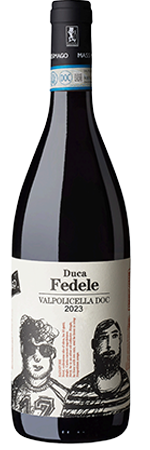
2024 Valpolicella DOC Duca Fedele
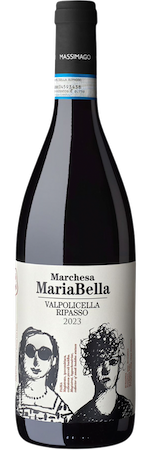
2023 Valpolicella Superiore Ripasso DOC Marchesa MariaBella
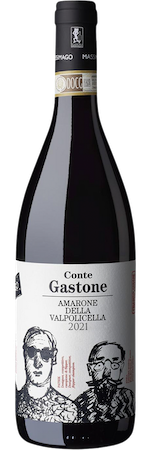
2021 Amarone della Valpolicella DOCG Conte Gastone